
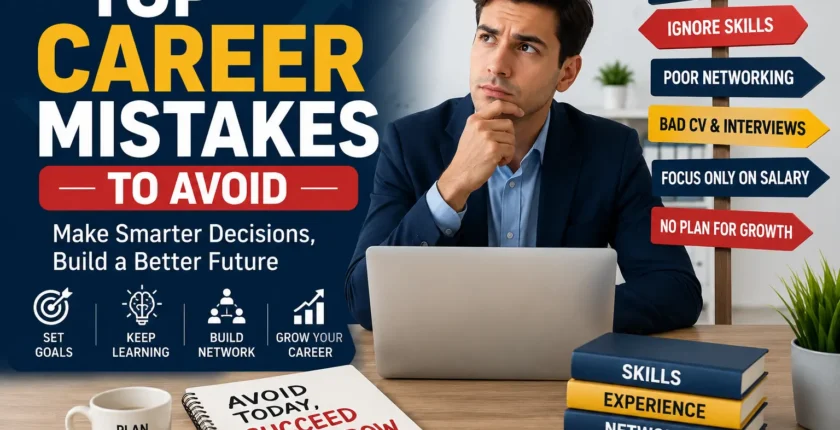
Top Career Mistakes to Avoid in 2026
Introduction
Building a successful career takes more than having the right degree or finding a good job. Your daily decisions, professional habits, skills, and attitude can have a major impact on your long-term career growth. While making mistakes is a normal part of professional life, some career mistakes can slow your progress or cause you to miss valuable opportunities.
Whether you are a fresh graduate, a job seeker, or an experienced professional, understanding common career mistakes can help you make better decisions. In today’s competitive job market, employers look for candidates who can demonstrate relevant skills, professionalism, adaptability, and a willingness to learn.
In this article, we will discuss the top career mistakes to avoid and practical ways to build a stronger and more successful career.
1. Choosing a Career Without Proper Research
One of the biggest career mistakes is choosing a profession simply because it is popular, pays well, or is recommended by someone else.
Before choosing a career path, consider your interests, skills, strengths, financial goals, and long-term opportunities. Research different industries and understand what qualifications and skills employers require.
A career that suits your abilities and interests is more likely to provide long-term satisfaction. Before choosing a career path, research occupations, education requirements, employment prospects, and advancement opportunities using reliable career planning resources such as those provided by the U.S. Bureau of Labor Statistics.
2. Using the Same CV for Every Job
Sending the same CV to every employer can reduce your chances of getting interviews.
Different jobs have different requirements. Employers want to see relevant skills and experience that match the position they are hiring for. Before applying for a position, learn what recruiters look for in a CV and customize your CV according to the requirements of the job.
Instead of using one generic CV, customize it for each important application. Highlight relevant experience, skills, achievements, and keywords from the job description.
A well-optimized CV can make it easier for recruiters to understand why you are suitable for the position.
3. Ignoring Skill Development
The job market continues to change, and skills that were valuable several years ago may not be enough for future opportunities.
One common career mistake is stopping your learning after completing a degree or getting a job. If you are updating your CV, our guide to the best skills to add to your CV in 2026 can help you identify relevant skills to highlight.
Make continuous learning part of your career strategy. Depending on your field, you can learn through online courses, professional projects, workshops, books, tutorials, and practical experience.
Developing both technical and soft skills can make you more competitive.
4. Failing to Build a Professional Network
Many people only start networking when they need a job. This is a mistake.
Professional networking should be an ongoing activity. Connect with people in your industry, participate in professional communities, attend events, and maintain relationships with former colleagues and classmates. Building a professional network is an important part of career development. LinkedIn recommends using your network to stay connected with colleagues, alumni, recruiters, and other professionals.
Platforms such as LinkedIn can also help you connect with recruiters, employers, and professionals in your field.
A strong professional network can introduce you to opportunities that may never appear on traditional job boards.
5. Not Preparing for Job Interviews
Having a strong CV does not guarantee a job offer. Poor interview preparation can cause an otherwise qualified candidate to lose an opportunity. For additional preparation, review our guide on how to answer “Tell Me About Yourself” and practice your response before the interview.
Before an interview, research the company, understand the job description, and prepare answers to common interview questions.
Practice explaining your experience, strengths, achievements, and career goals clearly.
You should also prepare a few thoughtful questions to ask the interviewer. Good preparation can improve both your confidence and performance.
6. Staying in a Job With No Growth
Job stability is important, but staying in a position for years without learning or growing can eventually limit your career.
If your current role offers no opportunities to develop new skills, take on responsibilities, or advance professionally, consider your options.
Before leaving, however, evaluate whether you can create growth opportunities within your current organization. You might request additional responsibilities, training, or a new project.
The goal should not simply be to change jobs frequently but to continue progressing.
7. Focusing Only on Salary
Salary is an important part of any job decision, but it should not be the only factor.
Consider other aspects such as
- Career growth
- Learning opportunities
- Company culture
- Job responsibilities
- Work-life balance
- Benefits
- Management
- Location and flexibility
- Long-term career potential
A slightly lower salary may sometimes provide better experience and growth opportunities that benefit your career in the long run.
8. Neglecting Your Online Professional Presence
Employers may look at a candidate’s online professional presence before making a hiring decision.
An incomplete LinkedIn profile, outdated information, or an unprofessional online presence can create a negative impression.
Keep your professional profiles updated. Make sure your job title, skills, experience, education, and achievements are accurate. You can also learn how to create a professional LinkedIn profile to improve your professional online presence.
You should also use a professional profile photo and write a clear summary that explains your expertise and career goals.
9. Avoiding Feedback
Another common career mistake is taking professional feedback personally or refusing to accept criticism.
Constructive feedback can help you identify weaknesses and improve your performance.
When a manager or colleague provides feedback, listen carefully and think about how you can use it to improve.
Professionals who are open to learning from feedback are often better prepared for greater responsibilities.
10. Poor Communication
Technical skills are important, but communication skills can also strongly influence career success.
Poor communication can lead to misunderstandings, missed deadlines, workplace conflicts, and damaged professional relationships.
Work on communicating clearly in emails, meetings, presentations, and everyday conversations.
Learn how to explain your ideas, ask questions, listen actively, and communicate professionally with colleagues and managers.
11. Not Tracking Your Achievements
Many professionals complete valuable projects but fail to keep a record of what they accomplished.
This can become a problem when updating your CV, preparing for an interview, requesting a promotion, or negotiating salary.
Keep a simple record of important achievements. For example, note projects you completed, problems you solved, responsibilities you took on, and measurable improvements you contributed to.
Whenever possible, use numbers to demonstrate your results.
12. Changing Jobs Too Frequently Without a Strategy
Changing jobs can sometimes accelerate career growth, but frequently switching jobs without a clear reason may create questions about your career direction.
Before accepting a new position, evaluate whether it provides meaningful improvements in terms of responsibilities, skills, compensation, career development, or professional experience.
Make career moves strategically rather than simply leaving whenever you become frustrated.
13. Ignoring Work-Life Balance
Career success should not come at the expense of your overall well-being.
Constantly working long hours without adequate rest can eventually affect productivity, motivation, and personal life.
Learn to manage your workload, prioritize important tasks, and maintain reasonable boundaries where possible.
A sustainable career is one that allows you to continue performing well over the long term.
14. Being Afraid to Ask Questions
Some employees avoid asking questions because they are afraid of appearing inexperienced.
However, asking thoughtful questions can demonstrate that you want to understand your responsibilities and complete your work correctly.
If you do not understand a task, clarify expectations rather than repeatedly making avoidable mistakes.
The key is to make an effort to understand the problem before asking for help.
15. Ignoring Professional Relationships
Your behavior toward colleagues can affect your reputation.
Being disrespectful, unreliable, or difficult to work with can damage professional relationships and limit future opportunities.
Treat colleagues, managers, clients, and other professionals with respect. Be reliable, meet deadlines, communicate clearly, and maintain professionalism even when disagreements occur.
Your professional reputation can follow you throughout your career.
16. Failing to Adapt to Change
Industries, technologies, and workplace expectations change constantly.
Professionals who refuse to adapt may eventually find themselves less competitive in the job market.
Be willing to learn new tools, adopt new technologies, and develop skills relevant to your industry.
Adaptability is especially valuable when companies introduce new systems, processes, or technologies.
17. Waiting Too Long to Start Job Searching
Some people wait until they are completely unhappy with their current job before thinking about their next career move.
Instead, regularly monitor the job market and understand what employers are looking for.
Even if you are not actively looking for a new job, keeping your CV updated and maintaining your professional network can make future opportunities easier to pursue.
How to Avoid Career Mistakes
Avoiding career mistakes does not mean making every decision perfectly. Instead, focus on making informed decisions and learning from your experiences.
Here are some simple strategies:
- Set clear short-term and long-term career goals.
- Keep your CV updated.
- Continue developing relevant skills.
- Build a professional network.
- Prepare thoroughly for interviews.
- Ask for constructive feedback.
- Track your achievements.
- Maintain a professional online presence.
- Stay informed about your industry.
- Be open to new opportunities.
- Learn from your mistakes.
- Review your career progress regularly.
Final Thoughts
Your career is built through many small decisions over time. Avoiding common mistakes can help you protect your professional reputation, improve your skills, and identify better opportunities.
The most important thing is to remain proactive. Do not wait for your career to improve automatically. Continue learning, build meaningful professional relationships, improve your CV and interview skills, and stay prepared for changes in the job market.
Whether you are starting your first job or planning your next career move, avoiding these career mistakes can help you build a more successful and rewarding professional future.