
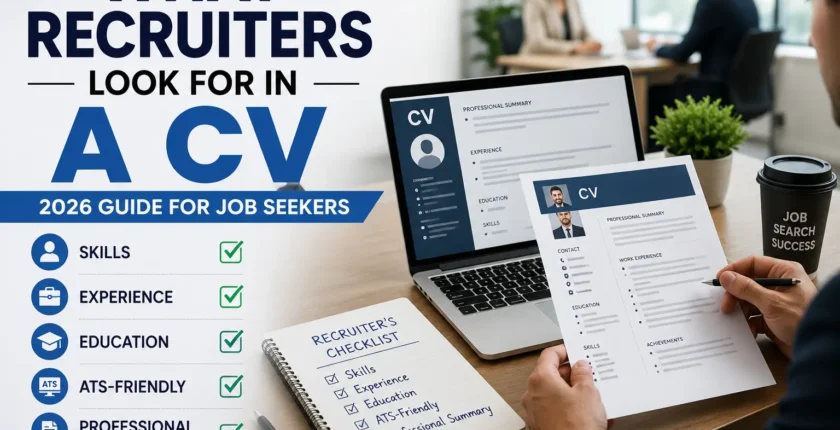
What Recruiters Look for in a CV (2026 Guide to Impress Hiring Managers)
Introduction
Your CV is often the first impression you make on a recruiter. Since hiring managers spend only a few seconds scanning each application, having a well-written and professionally formatted CV can significantly increase your chances of getting an interview.
Many job seekers believe that a long CV with every detail about their career is the best approach. In reality, recruiters prefer CVs that are clear, relevant, and easy to read. They want to quickly determine whether you’re a suitable candidate for the position. A professional CV can significantly increase your chances of getting an interview. If you’re starting from scratch, read our guide on How to Write a CV for Jobs in Pakistan.
In this guide, we’ll explain exactly what recruiters look for in a CV, helping you create an application that stands out from the competition.
1. A Professional Layout
The first thing recruiters notice is the appearance of your CV.
A professional CV should include:
- Clear headings
- Easy-to-read fonts
- Consistent formatting
- Proper spacing
- Bullet points instead of lengthy paragraphs
A cluttered CV can make recruiters lose interest quickly. Keep your design clean and organized.
2. Relevant Personal Information
Include only essential contact details, such as
- Full Name
- Mobile Number
- Professional Email Address
- LinkedIn Profile (optional)
- City and Country
Avoid adding unnecessary personal details like the following:
- CNIC Number
- Marital Status
- Religion
- Father’s Name
- Passport Number (unless requested)
Modern recruiters only need information relevant to hiring.
3. A Strong Professional Summary
Your professional summary appears near the top of your CV.
In just 3–5 lines, explain:
- Who you are
- Your experience
- Your strongest skills
- Your career objective
Example:
Software Quality Assurance Engineer with 3+ years of experience in manual testing, bug reporting, API testing, and Agile environments. Skilled in Jira, SQL, and creating detailed test cases with a focus on delivering high-quality software.
A strong summary encourages recruiters to continue reading.
4. Relevant Work Experience
Recruiters spend the most time reviewing your work experience.
For each position include:
- Job title
- Company name
- Employment dates
- Key responsibilities
- Measurable achievements
Instead of writing:
- Responsible for testing software.
Write:
- Executed over 500 manual test cases, reducing production defects by 30%.
Numbers make your experience more credible.
5. Skills That Match the Job Description
One of the biggest reasons candidates get rejected is because their CV doesn’t match the advertised role.
Always customize your CV by including skills mentioned in the job description.
Examples:
IT Jobs
- Manual Testing
- Selenium
- SQL
- API Testing
- Jira
- Agile
Marketing Jobs
- SEO
- Google Analytics
- Content Writing
- Social Media Marketing
Finance Jobs
- Excel
- Financial Reporting
- Bookkeeping
- QuickBooks
Matching your skills with the employer’s requirements improves your chances of passing Applicant Tracking Systems (ATS).
6. Achievements Instead of Duties
Recruiters appreciate candidates who demonstrate impact.
Instead of listing only daily tasks, highlight achievements.
Examples:
- Increased website traffic by 40%.
- Reduced testing time by 25%.
- Managed projects worth £50,000.
- Improved customer satisfaction scores.
Achievements help recruiters understand the value you can bring to their organization.
7. Education
Include:
- Degree
- Institution
- Graduation year
- Relevant certifications
Fresh graduates can place education above work experience if they have limited professional experience.
8. Keywords for ATS
Many companies use Applicant Tracking Systems (ATS) to filter CVs before a recruiter even sees them.
To improve your chances:
- Use keywords from the job advertisement.
- Include industry-specific terminology.
- Avoid inserting keywords unnaturally.
- Use standard section headings like “Work Experience” and “Skills.”
An ATS-friendly CV is more likely to reach a hiring manager.
9. Soft Skills
Technical skills matter, but recruiters also value soft skills.
Popular soft skills include:
- Communication
- Teamwork
- Problem-solving
- Leadership
- Time management
- Adaptability
- Critical thinking
Support these skills with examples from your experience whenever possible.
10. No Grammar or Spelling Mistakes
Even a single spelling mistake can create a negative impression.
Before submitting your CV:
- Proofread carefully.
- Use grammar-checking tools.
- Read it aloud.
- Ask someone else to review it.
A polished CV reflects professionalism and attention to detail.
11. Career Progression
Recruiters like to see growth in your career.
Examples include:
- Promotions
- Increased responsibilities
- Leadership roles
- New certifications
- Successful projects
Showing progression demonstrates commitment and continuous improvement.
12. Tailored CV for Every Job
Avoid sending the same CV to every employer.
Instead:
- Update your professional summary.
- Highlight relevant skills.
- Rearrange experience based on the role.
- Include keywords from the job posting.
Customizing your CV significantly improves your interview chances.
Common CV Mistakes Recruiters Notice
Avoid these common errors:
- Using an unprofessional email address
- Adding irrelevant personal details
- Poor formatting
- Long paragraphs
- Generic objective statements
- Grammar mistakes
- Including outdated skills
- Listing every job you’ve ever had
- Using different fonts and colours
- Submitting a CV without proofreading
Avoid these mistakes and review our article on Common CV Mistakes That Cost You Interviews for more detailed guidance.
Tips to Make Your CV Stand Out
Follow these best practices:
- Keep your CV to one or two pages.
- Use action verbs such as “Managed,” “Developed,” and “Improved.”
- Quantify achievements wherever possible.
- Include keywords from the job description.
- Maintain consistent formatting.
- Update your CV regularly.
- Save and send it as a PDF unless instructed otherwise.
For more expert CV writing and career guidance, visit Indeed Career Advice to learn additional best practices used by recruiters worldwide.
Final Thoughts
Understanding what recruiters look for in a CV can dramatically improve your chances of getting shortlisted. A successful CV is more than a list of qualifications—it is a marketing document that demonstrates your value to employers.
Focus on creating a clean, ATS-friendly CV that highlights relevant skills, measurable achievements, and professional growth. Tailor your CV for each application, proofread it carefully, and ensure every section supports the role you’re applying for. With these strategies, you’ll be better positioned to secure interviews and move closer to your next career opportunity.
Frequently Asked Questions (FAQs)
What is the first thing recruiters look for in a CV?
Recruiters usually notice the layout, professional summary, relevant work experience, and key skills within the first few seconds.
How long should a CV be?
Most recruiters prefer a CV that is one to two pages long, depending on your experience level.
Do recruiters use ATS software?
Yes. Many employers use Applicant Tracking Systems (ATS) to filter applications before they reach a recruiter.
Should I customize my CV for every job?
Yes. Tailoring your CV to match each job description improves your chances of passing ATS filters and getting shortlisted.
What skills should I include on my CV?
Include a combination of technical skills relevant to the job and soft skills such as communication, teamwork, problem-solving, and adaptability.
Comments are closed.