
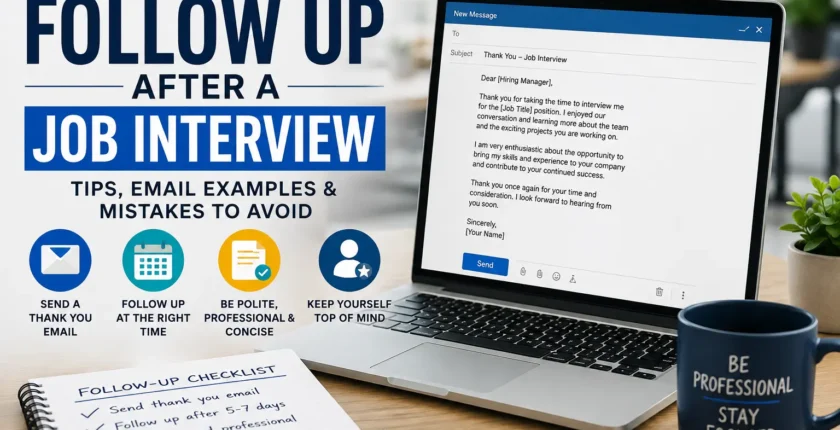
How to Follow Up After a Job Interview (Complete Guide for 2026)
Introduction
Many job seekers believe their work ends once the interview is over. In reality, what you do after the interview can significantly influence the hiring manager’s final decision. Sending a professional follow-up email shows appreciation, demonstrates your interest in the position, and helps keep you fresh in the employer’s mind. Before attending any interview, it’s important to prepare thoroughly. Read our How to Prepare for an Online Job Interview guide to improve your confidence and performance.
If you’ve recently attended a job interview and are wondering what to do next, this guide explains how to follow up after a job interview, when to send your message, what to write, and common mistakes to avoid.
Whether you’re applying for your first job or an experienced professional looking for new opportunities, these tips can help improve your chances of getting hired.
Why Following Up After an Interview Is Important
Many employers interview multiple candidates for the same position. A thoughtful follow-up email can help you stand out from the competition.
Benefits of following up include:
- Shows professionalism and good communication skills.
- Demonstrates genuine interest in the role.
- Reinforces your qualifications.
- Gives you another opportunity to mention important skills.
- Leaves a positive impression on the hiring team.
While a follow-up won’t guarantee a job offer, it can strengthen your application and show that you’re proactive.
When Should You Follow Up?
Timing matters.
The best time to send a thank-you email is within 24 hours after your interview.
If the interviewer mentioned a timeline for making a hiring decision, wait until that date has passed before sending another follow-up message.
Recommended Timeline
| Situation | Best Time |
|---|---|
| Thank-you email | Within 24 hours |
| Follow-up after no response | 5–7 business days |
| Final check-in | 7–10 days later, if appropriate |
Avoid sending daily emails or repeatedly calling the recruiter.
How to Write a Professional Follow-Up Email
Your follow-up email should be short, polite, and professional. For additional professional email examples, you can also explore the interview follow-up resources available on Indeed.
Include these elements:
1. Thank the Interviewer
Begin by thanking them for taking the time to meet with you.
Example:
Thank you for taking the time to interview me yesterday. I appreciate the opportunity to learn more about your company and the role.
2. Express Continued Interest
Let them know you’re still enthusiastic about joining their team.
Example:
After our conversation, I’m even more excited about the opportunity to contribute to your organization.
3. Reinforce Your Qualifications
Briefly mention one or two strengths discussed during the interview.
Example:
I believe my experience in project management and communication would allow me to contribute effectively to your team.
4. Close Professionally
End with appreciation and mention that you’re looking forward to hearing from them.
Example:
Thank you again for your consideration. I look forward to hearing from you regarding the next steps.
Sample Follow-Up Email
Subject: Thank You for the Interview
Dear Mr./Ms. [Hiring Manager],
Thank you for taking the time to interview me for the marketing executive position yesterday.
It was great learning more about your company and discussing how my skills and experience align with your team’s goals.
Our conversation strengthened my interest in joining your organization, and I believe I can make a valuable contribution.
Thank you once again for your time and consideration. I look forward to hearing from you soon.
Kind regards,
Your Name
What If You Haven’t Heard Back?
Sometimes hiring decisions take longer than expected.
If the employer gave a specific hiring timeline and it has passed, it’s perfectly acceptable to send a polite follow-up email. If you’re unsure how long to wait before contacting an employer again, The Muse provides practical advice on interview follow-up etiquette.
Keep your message brief.
Example:
I hope you’re doing well. I wanted to follow up regarding the position I interviewed for last week. I’m still very interested in the opportunity and would appreciate any updates you can share regarding the hiring process.
Common Mistakes to Avoid
Following up incorrectly can create a negative impression.
Avoid these mistakes:
Being Too Pushy
Do not send multiple emails every day or repeatedly call the recruiter.
Writing Long Emails
Hiring managers receive many emails daily. Keep your message concise.
Using Informal Language
Avoid slang, emojis, or casual expressions.
Forgetting to Proofread
Grammar and spelling mistakes can reduce your professionalism.
Sounding Desperate
Remain confident and courteous rather than demanding an immediate response.
Should You Follow Up by Phone?
In most professional industries, email is the preferred communication method.
Phone calls are generally appropriate only if:
- The recruiter specifically asked you to call.
- The company primarily communicates by phone.
- The job posting requested phone follow-ups.
Otherwise, stick to email.
How Many Times Should You Follow Up?
Generally:
- Send one thank-you email within 24 hours.
- Send one follow-up email after the hiring deadline passes.
- If there’s still no response after another week, you may send one final polite message.
If you receive no reply after that, move on and continue applying for other opportunities.
Tips to Increase Your Chances of Getting Hired
Following up is only one part of the hiring process.
Improve your success by:
- Customizing your CV for each application.
- Researching the company before interviews.
- Preparing answers to common interview questions.
- Dressing professionally.
- Arriving on time.
- Asking thoughtful questions during the interview.
- Following up professionally afterward.
Preparing strong responses to common interview questions is equally important. Learn How to Answer “Tell Me About Yourself” to make a great first impression. These habits demonstrate reliability and professionalism throughout the hiring process. You can also find valuable career and interview advice from industry professionals on LinkedIn.
Signs Your Follow-Up Is Working
While every company has a different hiring process, positive signs include:
- The recruiter responds quickly.
- They ask for additional documents.
- They request references.
- They invite you for another interview.
- They discuss salary or start dates.
Even if the process takes time, a polite follow-up keeps communication open.
Frequently Asked Questions
Should I always send a follow-up email after an interview?
Yes. Sending a thank-you email within 24 hours is considered good professional etiquette and helps reinforce your interest.
How long should I wait before following up?
If the interviewer provided a hiring timeline, wait until that date has passed. Otherwise, follow up after five to seven business days.
What if I interviewed with multiple people?
If possible, send a personalized thank-you email to each interviewer. Mention something specific from your conversation with each person.
Can a follow-up email improve my chances?
Yes. While it doesn’t guarantee a job offer, it demonstrates professionalism, enthusiasm, and strong communication skills.
Is it okay to send more than one follow-up?
Yes, but keep it limited. One thank-you email and one or two polite follow-ups are generally enough.
Final Thoughts
Learning how to follow up after a job interview is an important skill that many job seekers overlook. A well-written follow-up email shows professionalism, reinforces your qualifications, and reminds employers that you’re genuinely interested in the position. A well-written CV increases your chances of getting shortlisted. Discover What Recruiters Look for in a CV to strengthen your job application.
Keep your message concise, respectful, and timely. Even if you don’t receive an immediate response, maintaining professional communication leaves a positive impression and may benefit you in future opportunities.
A successful job search doesn’t end when the interview is over. Following up thoughtfully can be the final step that helps you secure your next job.