
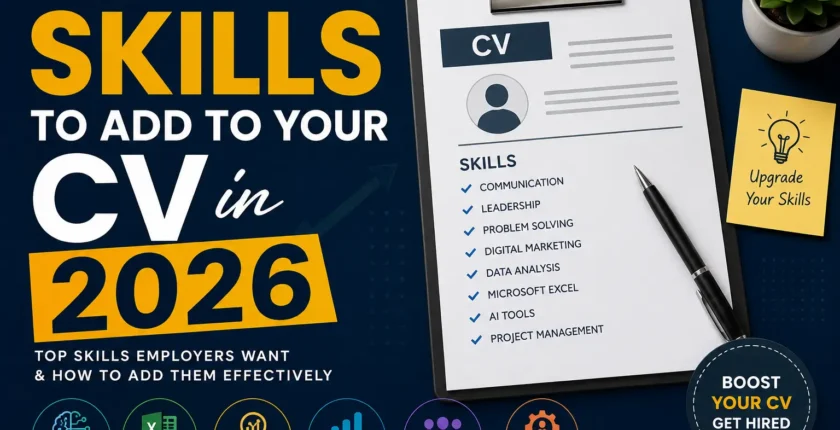
Best Skills to Add to Your CV in 2026
Introduction
In today’s competitive job market, having a well-written CV is no longer enough. Employers are looking for candidates who possess the right combination of technical expertise and workplace skills. Whether you’re a fresh graduate searching for your first job or an experienced professional aiming for career growth, highlighting the right skills on your CV can significantly improve your chances of getting shortlisted.
Before adding new skills to your resume, make sure your CV follows the latest format by reading our How to Write a CV for Jobs in Pakistan (2026 Guide).
In 2026, recruitment is becoming more technology-driven. Many companies use Applicant Tracking Systems (ATS) to filter CVs before a recruiter even reads them. This means that including relevant, job-specific skills has become more important than ever.
In this guide, you’ll discover the best skills to add to your CV in 2026, how to present them effectively, and which skills employers in Pakistan and around the world value the most.
Why Skills Matter on Your CV
Your skills section is one of the first areas recruiters review. It quickly shows whether you’re a suitable candidate for the role. A strong skills section can:
- Increase your chances of passing ATS screening.
- Match employer expectations.
- Demonstrate your professional strengths.
- Help recruiters understand your abilities at a glance.
- Improve your chances of securing an interview.
Rather than listing every skill you have, focus on those that are directly relevant to the position you’re applying for.
Best Technical Skills to Add to Your CV in 2026
Technical skills are measurable abilities that you learn through education, training, or work experience. These skills vary by industry but remain highly valuable across many professions.
1. Artificial Intelligence (AI) Tools
AI is transforming workplaces worldwide. Employers increasingly value candidates who know how to use AI responsibly to improve productivity.
Examples include:
- ChatGPT
- Microsoft Copilot
- Google Gemini
- AI-powered research tools
- AI content assistance
Understanding how to use these tools efficiently can give you a competitive advantage in many industries.
2. Microsoft Excel
Excel remains one of the most requested workplace skills. You can improve your Excel skills with free learning resources available on Microsoft Learn. Businesses rely on it for reporting, budgeting, financial analysis, and data management.
Useful Excel skills include:
- Pivot Tables
- VLOOKUP/XLOOKUP
- Charts
- Conditional Formatting
- Data Validation
- Basic formulas
3. Digital Marketing
As businesses continue moving online, digital marketing professionals remain in high demand.
Relevant skills include:
- Social Media Marketing
- Email Marketing
- Content Marketing
- Google Ads
- Facebook Ads
- Campaign Management
4. Search Engine Optimization (SEO)
SEO helps websites rank higher in search engines and generate organic traffic. Even basic SEO knowledge is valuable for marketing, content writing, and e-commerce roles.
Important SEO skills include:
- Keyword research
- On-page SEO
- Technical SEO
- Link building
- Content optimization
- SEO auditing
5. Data Analysis
Companies use data to make smarter business decisions. Candidates with analytical skills are highly valued.
Popular tools include:
- Microsoft Excel
- Power BI
- Tableau
- Google Sheets
- SQL
6. Programming
Programming skills continue to be among the highest-paying technical abilities.
Popular programming languages include:
- Python
- Java
- JavaScript
- C#
- PHP
Even basic coding knowledge can strengthen your CV in technology-related fields.
7. Graphic Design
Graphic design is useful in marketing, advertising, social media, and branding.
Popular software includes:
- Adobe Photoshop
- Adobe Illustrator
- Canva
- Figma
8. Video Editing
Businesses increasingly use video content to promote products and services.
Popular editing software includes:
- DaVinci Resolve
- Adobe Premiere Pro
- CapCut
- Final Cut Pro
9. Cloud Computing
Cloud platforms are essential for modern businesses.
Examples include:
- Microsoft Azure
- Amazon Web Services (AWS)
- Google Cloud Platform
10. Cybersecurity
Protecting digital information is a growing priority. Basic cybersecurity knowledge is valuable even outside IT roles.
Examples include:
- Network security
- Information security
- Risk assessment
- Security awareness
- Identity management
Essential Soft Skills Employers Want
Soft skills describe how you interact with others and perform in the workplace. They are important for almost every profession.
Communication
Good communication improves teamwork, customer relationships, and workplace efficiency.
Teamwork
Most organizations require employees to collaborate with colleagues across departments.
Problem-Solving
Employers appreciate individuals who can identify issues and develop practical solutions.
Time Management
Meeting deadlines and managing multiple responsibilities demonstrates professionalism.
Adaptability
Technology and business needs change quickly. Employees who adapt easily are highly valued.
Leadership
Leadership isn’t limited to managers. Taking initiative and supporting others demonstrates leadership potential.
Critical Thinking
Employers look for candidates who can evaluate situations carefully before making decisions.
Creativity
Creative thinking encourages innovation and helps solve business challenges.
Emotional Intelligence
Understanding your own emotions and those of others improves workplace relationships.
Strong Work Ethic
Being dependable, responsible, and committed helps build trust with employers.
Best Skills for Fresh Graduates
If you have limited work experience, focus on transferable skills gained through education, internships, or volunteer work.
Examples include:
- Microsoft Office
- Presentation skills
- Research skills
- Communication
- Team collaboration
- Internet research
- Time management
- Adaptability
- Basic computer skills
- Problem-solving
Remember, employers understand that graduates may not have extensive experience. Demonstrating your willingness to learn can make a positive impression.
Best Skills for Experienced Professionals
Professionals with work experience should emphasize advanced skills that reflect leadership and expertise.
Examples include:
- Project management
- Team leadership
- Budget planning
- Client relationship management
- Strategic planning
- Business analysis
- Process improvement
- Performance reporting
- Stakeholder communication
- Risk management
Industry-Specific Skills
Different industries require different skill sets. Tailor your CV based on the role you’re applying for.
Information Technology
- Programming
- Networking
- Cloud Computing
- Database Management
- Cybersecurity
Marketing
- SEO
- Google Ads
- Social Media Marketing
- Email Marketing
- Analytics
Finance
- Financial Analysis
- Excel
- Budgeting
- Tax Preparation
- Accounting Software
Healthcare
- Patient Care
- Medical Documentation
- Healthcare Compliance
- Clinical Procedures
Engineering
- AutoCAD
- Project Planning
- Quality Assurance
- Technical Documentation
Customer Service
- Communication
- Conflict Resolution
- CRM Software
- Active Listening
How to Add Skills to Your CV Correctly
Adding skills isn’t just about creating a long list. Present them strategically.
Create a Dedicated Skills Section
Include 8–15 relevant skills near the top of your CV.
Example:
Skills
- Microsoft Excel
- ChatGPT
- SEO
- Data Analysis
- Communication
- Teamwork
- Time Management
- Problem-Solving
- Leadership
- Project Management
Include Skills in Your Work Experience
Instead of only listing skills, demonstrate how you’ve used them.
For example:
- Improved website traffic by implementing SEO strategies.
- Managed a team of five members to complete projects on schedule.
- Created Excel dashboards that reduced reporting time.
This approach provides evidence of your abilities.
Customize Your CV
Always read the job description carefully and include skills that match the employer’s requirements. Tailoring your CV for each application can significantly improve your chances of passing ATS screening. Pair your CV with a strong application by reading our How to Write a Cover Letter That Gets You Hired guide.
Skills You Should Avoid
Avoid using vague or outdated skills that don’t provide meaningful information.
Examples include:
- Hardworking
- Honest
- Good person
- Responsible
- Fast learner (without examples)
- Dedicated
Instead, support these qualities with achievements or real work experience.
Common Mistakes When Listing Skills
Many job seekers make avoidable mistakes that reduce the effectiveness of their CVs.
Common mistakes include:
- Copying skills from online templates.
- Adding skills you don’t actually have.
- Listing too many unrelated skills.
- Ignoring the job description.
- Failing to provide examples of your abilities.
Keep your skills section honest, relevant, and backed by experience whenever possible.
How to Improve Your Skills
If you’re missing important skills, there are many ways to develop them.
You can:
You can also enroll in Google Career Certificates or take professional courses on Coursera to develop job-ready skills.
- Take online courses.
- Complete professional certifications.
- Work on personal projects.
- Join internships.
- Volunteer for relevant work.
- Practice using industry-standard software.
- Build a portfolio to showcase your work.
Continuous learning demonstrates commitment to professional growth and helps keep your CV competitive.
Frequently Asked Questions
What are the best skills to add to a CV in 2026?
The best skills include AI tools, Microsoft Excel, data analysis, SEO, digital marketing, programming, communication, teamwork, problem-solving, and adaptability.
How many skills should I include on my CV?
Most professionals should include between 8 and 15 relevant skills that match the job description.
Should I include soft skills on my CV?
Yes. Soft skills such as communication, teamwork, leadership, and time management are highly valued by employers and should complement your technical skills.
Can fresh graduates include skills without work experience?
Absolutely. Skills gained through university projects, internships, volunteer work, online courses, and extracurricular activities can strengthen your CV.
Which skills are most in demand in Pakistan?
Some of the most in-demand skills include AI tools, Microsoft Excel, digital marketing, SEO, programming, customer service, cloud computing, data analysis, project management, and communication.
Conclusion
Choosing the right skills for your CV can make a significant difference in today’s competitive job market. Employers in 2026 are looking for candidates who combine technical expertise with strong interpersonal abilities. Instead of creating a generic skills list, tailor your CV for every application by matching your skills with the job requirements.
Whether you’re a fresh graduate or an experienced professional, regularly updating your CV with relevant and in-demand skills will improve your chances of passing ATS screening and securing more interviews. Invest time in learning new skills, gaining practical experience, and showcasing your strengths clearly.Once your CV is ready, you can create a professional LinkedIn profile to showcase your experience and skills to recruiters. A well-crafted skills section can help you stand out and move one step closer to your next career opportunity.
Comments are closed.